

Quality Wall
An additional, controlled inspection point during launches or quality incidents.
Learn more
Service
Isolate suspect parts
and keep conforming parts moving
When a defect is suspected, we help you isolate the parts concerned, sort them against agreed criteria and keep conforming parts flowing to your line and your customer — with clear identification and reporting.
Isolate
Sort
Identify
Report
Defined before
sorting starts
Parts identified
and segregated
Quantities and defects
per lot
Your site, a supplier’s
or your customer’s

The challenge
A quality alert, a customer complaint or an internal finding can put stock, work in progress and parts in transit under suspicion. Until the root cause is known and corrected, every suspect part is a risk for your line and your customer.
What we provide: a structured sorting and containment operation, organised around your defect criteria, so that suspect parts are checked, conforming parts are released and non-conforming parts are kept apart.
Reporting & traceability
Containment is only useful if everyone knows what was checked and what was found. Reporting content and frequency are agreed at the start and can include:
Our process
Suspect references, lots
and locations.
Defect definition, limit samples
and identification method.
Parts checked; conforming and
non-conforming parts kept apart.
Results shared to support
decisions and corrective actions.
Benefits
You can contact us as soon as the issue is identified, with the part references, the suspected defect, the quantities and the location. Start-up timing depends on the scope, the location, the resources required and access to the parts; it is agreed with you when the need is reviewed.
Sorting can be organised at your site, at a supplier’s premises, at your customer’s facility or in a warehouse, depending on where the suspect parts are and on the access and safety conditions.
Every part in the suspect scope is checked against the defect criteria, rather than a sample. It is used when the risk requires it and is agreed with you when the scope is defined.
The identification method — for example a mark, a label or a dedicated container — is agreed with you, often in line with your customer’s requirements, so that checked parts can be recognised along the flow.
No. Containment protects your customer while the root cause is investigated. The data collected during sorting can support your root-cause analysis and corrective actions, and our quality engineering support can help if needed.
Related services
An additional, controlled inspection point during launches or quality incidents.
Learn more
Controlled rework of non-conforming parts according to defined instructions.
Learn more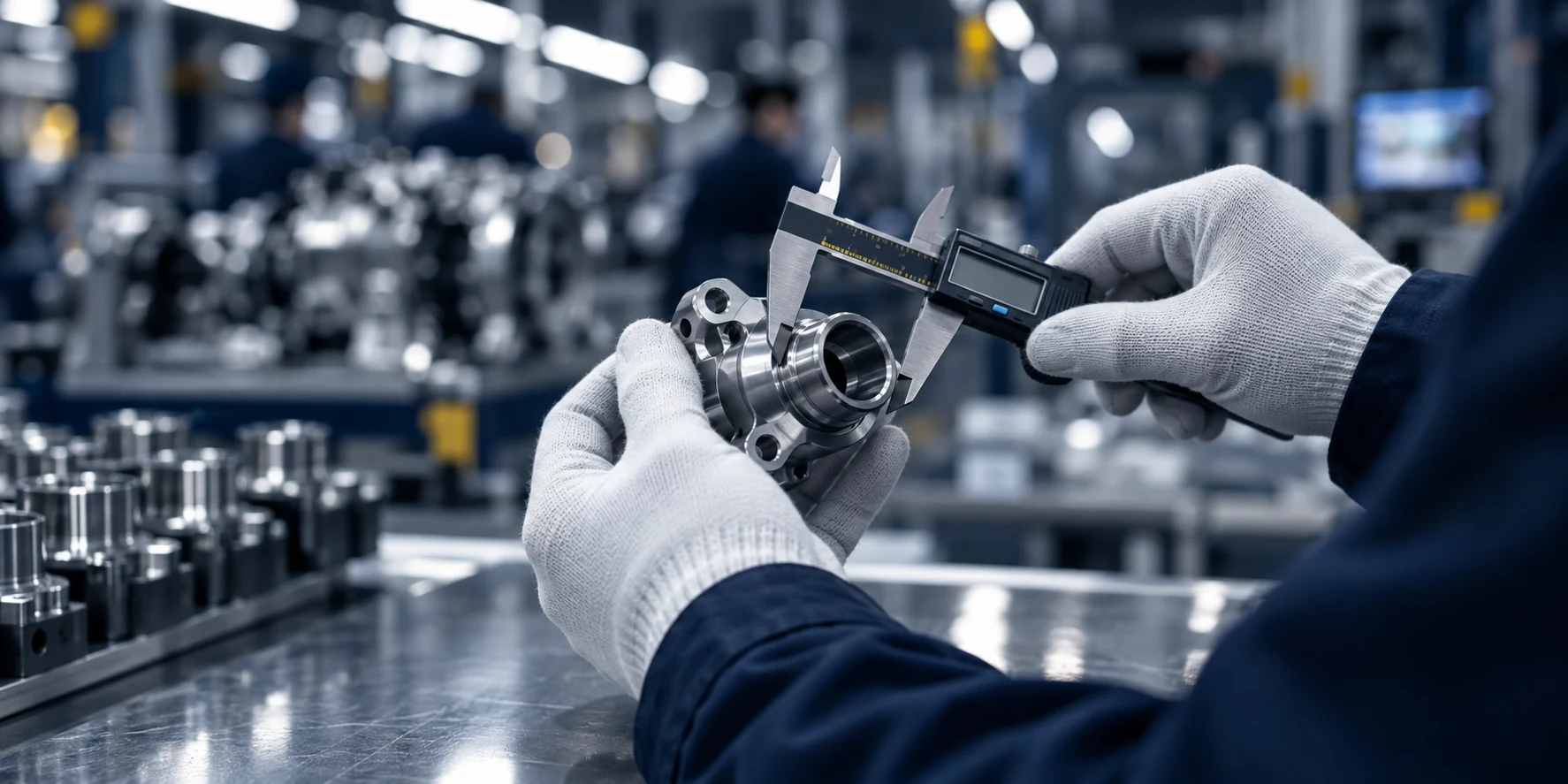
Incoming, in-process, final and pre-shipment checks: visual, dimensional and functional.
Learn more
Process and product quality support, assessments and problem solving.
Learn moreTell us about the parts, the suspected defect and the location —
we will review the situation with you.